

Impact & Evidence
We do not measure success by activity
We measure structural shift
When governance, prevention strategy, workforce systems, and learning infrastructure operate as a single system, institutions stabilize. Harm decreases. Capacity grows.
Below is how we define and evaluate impact.
What We Measure
Our work focuses on system-level outcomes across four domains
-
Clarity of decision rights
Alignment between stated values and operational practice
Reduction in symbolic commitments without execution
-
Movement from reactive programming to upstream structural intervention
Cross-sector coordination
Causal analysis embedded in planning
-
Reduction in burnout drivers
Role clarity and accountability alignment
Strengthened supervisory and reflective practice structures
-
Data used for real-time decision-making
Feedback loops integrated into implementation
Measurement tied to improvement, not compliance
Field Impact
Selected results from prior engagements:
A 25% reduction in youth-involved violent incidents within designated community zones over a 24-month implementation period
Expanded referral pathways and utilization rates for culturally responsive behavioral health services among historically excluded populations.
Implemented cross-site workforce stabilization frameworks across six city multi-agency public sector environments, aligning role clarity, supervision structures, and retention supports.
Established formal decision-right matrices and accountability pathways, increasing execution coherence across departments.
Our work focuses on structural coherence, measurable feedback loops, and institutional durability rather than episodic programming.


Published & Working Papers
CEPWS Lab produces applied research and field briefs at the intersection of prevention science, workforce systems, and governance design. These documents translate lived ecosystem experience into institutional strategy.
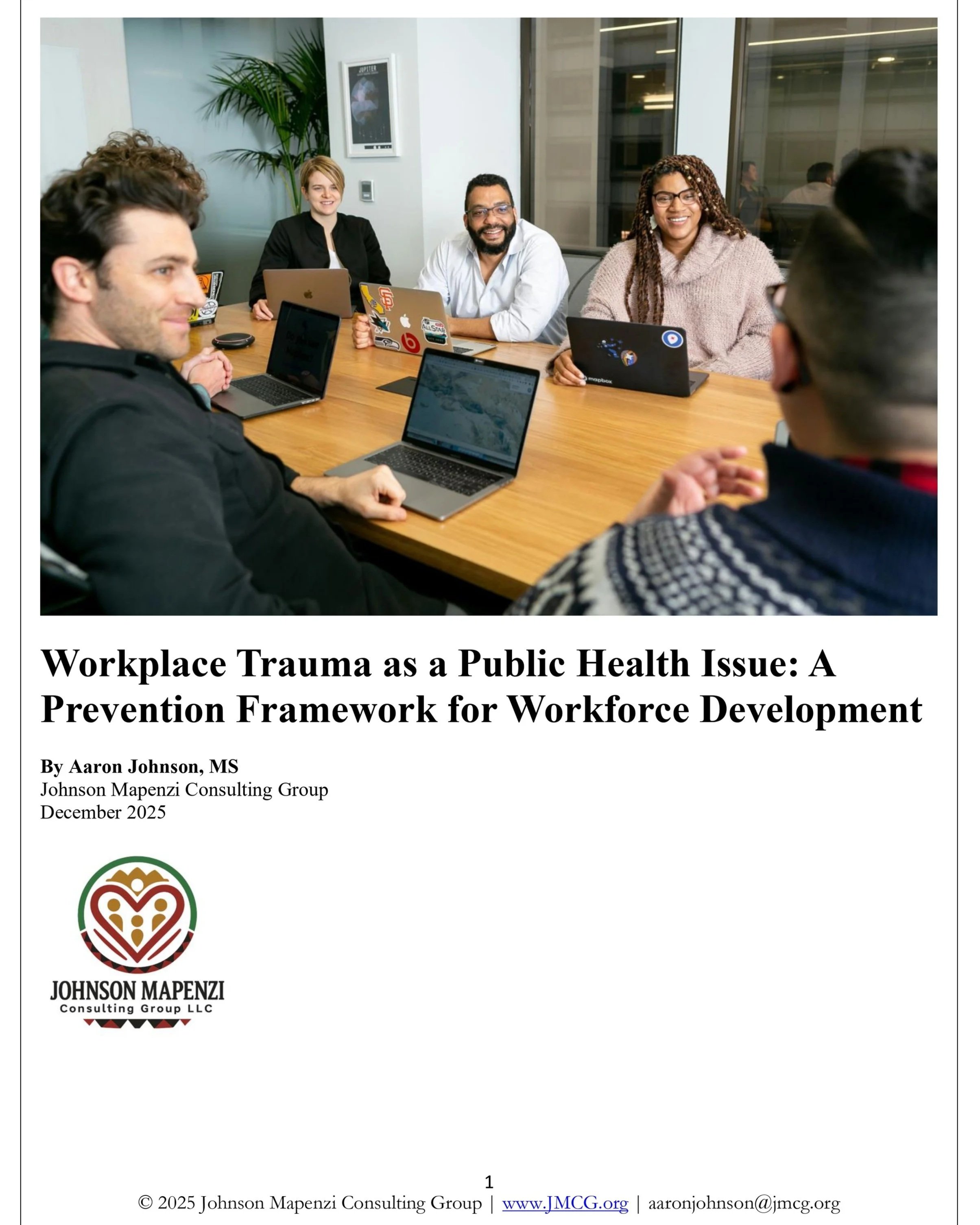
Workplace Trauma as a Public Health Issue: A Prevention Framework for Workforce Development
JMCG Trauma-Informed Workforce Framework No.1
A prevention framework positioning workplace trauma as a systemic public health determinant, not a personal deficit.
Workplace Trauma as a Public Health Issue: A Prevention Framework for Workforce Development
JMCG Trauma-Informed Workforce Framework No.1
A prevention framework positioning workplace trauma as a systemic public health determinant, not a personal deficit.
Ongoing Inquiry
CEPWS Lab is a living research and practice environment.
We publish working papers, field notes, and applied research on:
• Workforce systems as civic infrastructure
• Trauma-informed governance
• Prevention science in public institutions
• Measurement as institutional intelligence